DRUMS OF THE WORLD
Africa
Drum Zambia
Ngoma Drum / Trommel / Tambour / Zambia
The drum is the most widespread and culturally significant musical instrument in Zambia. Across the country's numerous ethnolinguistic communities, drums serve not only as musical instruments but also as essential vehicles of communication, social organization, ritual practice, and historical memory. Their forms, construction techniques, and performance traditions vary considerably among different groups, including the Lozi, Bemba, Tonga, Kaonde, Luvale, Lunda, and many others.
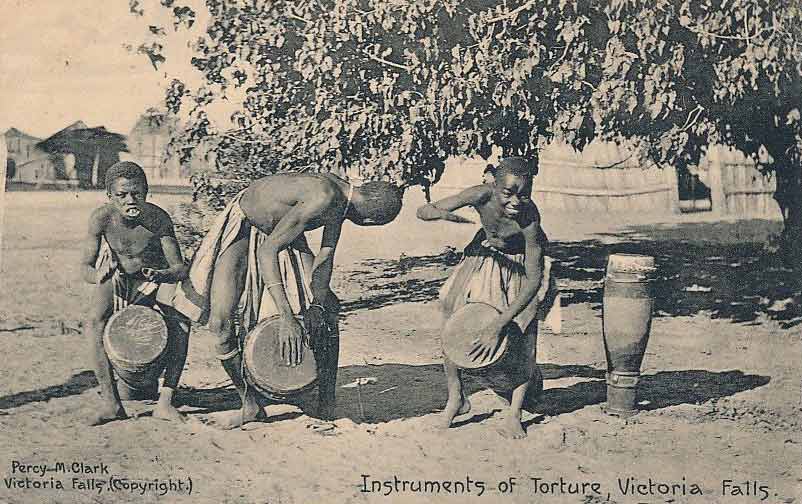
Historically, Zambia's drumming traditions developed within complex social systems in which music accompanied nearly every important stage of life. Drums announced ceremonies, reinforced political authority, accompanied agricultural activities, marked rites of passage, and supported healing practices. In many regions, drumming and dancing formed an inseparable artistic unit in which rhythm, movement, song, and collective participation created a shared cultural experience.
Among the best-documented traditions are the royal drums of the Lozi kingdom in western Zambia. Royal ensembles accompanied the Litunga, the Lozi king, during important ceremonies and played a central role in the public expression of political authority. Ernest Douglas Brown demonstrated that royal music in western Zambia functioned not merely as entertainment but as an essential component of social and political organization.
Organologically, Zambian drums display considerable diversity. Cylindrical, conical, and slightly barrel-shaped forms are all represented. Most are carved from a single log and covered with animal hide attached by pegs, cords, or lacing systems. Some drums are played with the hands, while others are struck with sticks. Their construction reflects both practical considerations and local aesthetic traditions.
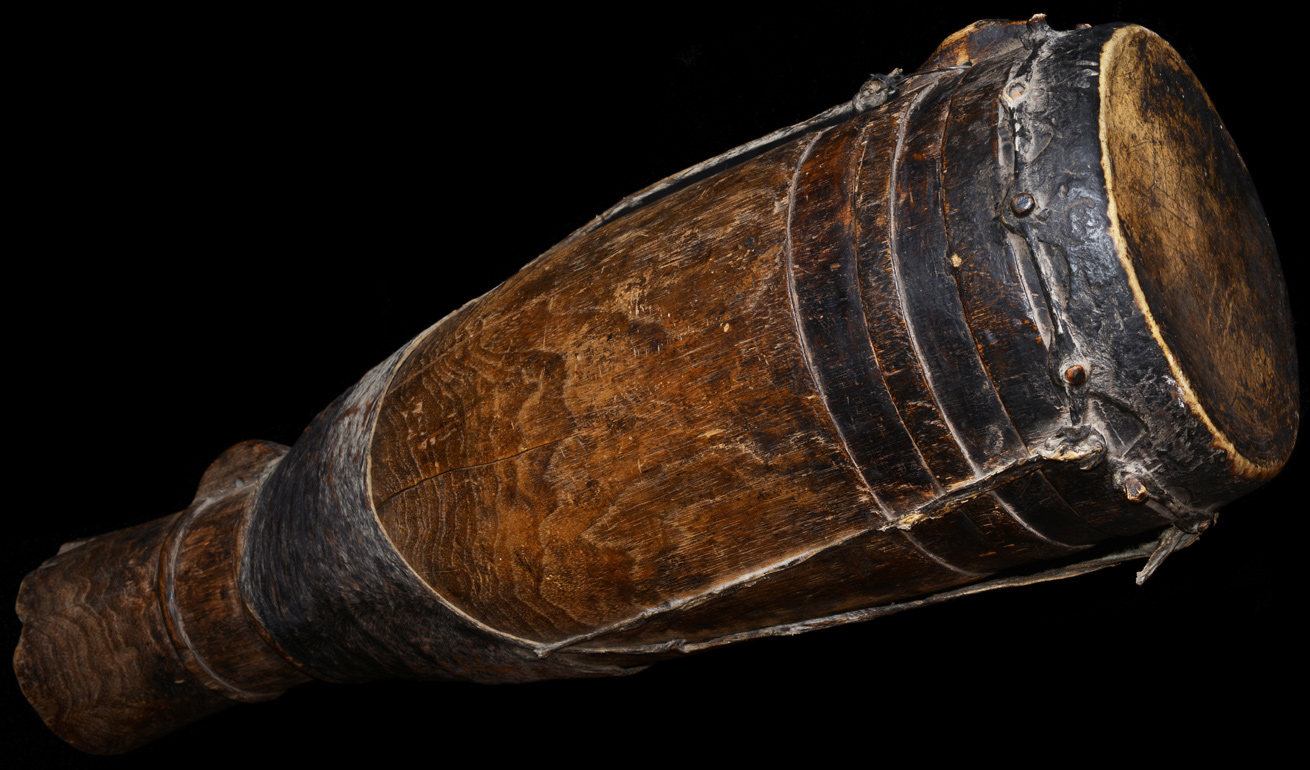
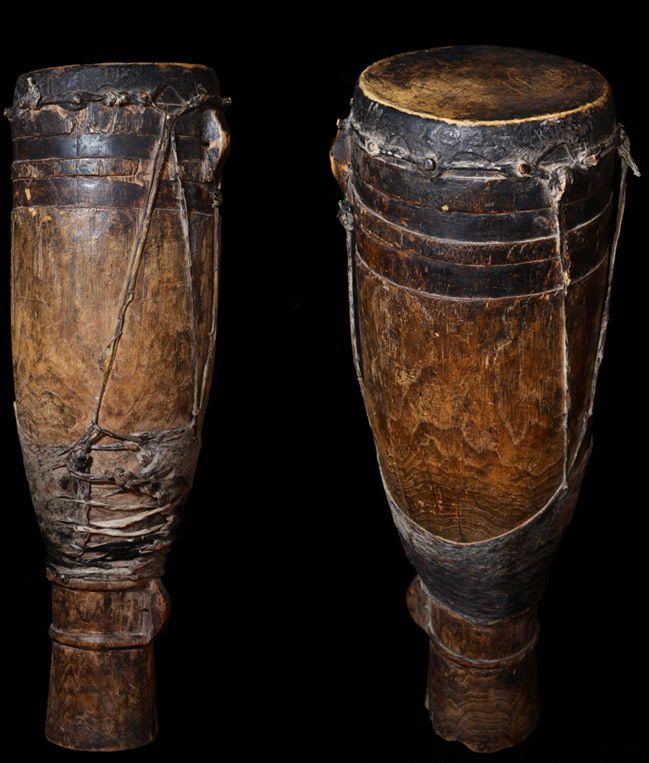
The present drum represents a finely carved, single-headed wooden drum with a slightly tapering body. The carefully worked shell and the leather tensioning system illustrate the sophisticated craftsmanship characteristic of many central and southern African drum-making traditions. The visible signs of long-term use, including the darkened drumhead and the worn lacing, testify to the instrument's active participation in musical performance rather than its production as a purely decorative object.
From an art-historical perspective, Zambian drums should be understood as both musical instruments and sculptural objects. Their carefully proportioned forms, carved surfaces, and functional design embody a material culture in which artistic expression and practical utility cannot be separated. Like many African drums, they challenge the traditional museum distinction between ethnographic artifact and work of art.
The drum is the most widespread and culturally significant musical instrument in Zambia. Across the country's numerous ethnolinguistic communities, drums serve not only as musical instruments but also as essential vehicles of communication, social organization, ritual practice, and historical memory. Their forms, construction techniques, and performance traditions vary considerably among different groups, including the Lozi, Bemba, Tonga, Kaonde, Luvale, Lunda, and many others.
Historically, Zambia's drumming traditions developed within complex social systems in which music accompanied nearly every important stage of life. Drums announced ceremonies, reinforced political authority, accompanied agricultural activities, marked rites of passage, and supported healing practices. In many regions, drumming and dancing formed an inseparable artistic unit in which rhythm, movement, song, and collective participation created a shared cultural experience.
Among the best-documented traditions are the royal drums of the Lozi kingdom in western Zambia. Royal ensembles accompanied the Litunga, the Lozi king, during important ceremonies and played a central role in the public expression of political authority. Ernest Douglas Brown demonstrated that royal music in western Zambia functioned not merely as entertainment but as an essential component of social and political organization.
Organologically, Zambian drums display considerable diversity. Cylindrical, conical, and slightly barrel-shaped forms are all represented. Most are carved from a single log and covered with animal hide attached by pegs, cords, or lacing systems. Some drums are played with the hands, while others are struck with sticks. Their construction reflects both practical considerations and local aesthetic traditions.
The present drum represents a finely carved, single-headed wooden drum with a slightly tapering body. The carefully worked shell and the leather tensioning system illustrate the sophisticated craftsmanship characteristic of many central and southern African drum-making traditions. The visible signs of long-term use, including the darkened drumhead and the worn lacing, testify to the instrument's active participation in musical performance rather than its production as a purely decorative object.
From an art-historical perspective, Zambian drums should be understood as both musical instruments and sculptural objects. Their carefully proportioned forms, carved surfaces, and functional design embody a material culture in which artistic expression and practical utility cannot be separated. Like many African drums, they challenge the traditional museum distinction between ethnographic artifact and work of art.
References:
Brown, Ernest Douglas. Drums of Life: Royal Music and Social Life in Western Zambia. PhD dissertation, University of Washington, 1984.
Jones, Arthur Morris. African Music in Northern Rhodesia and Some Other Places. Rhodes-Livingstone Papers No. 28. Manchester University Press, 1958.
Kubik, Gerhard. Africa and the Blues. Jackson: University Press of Mississippi, 1999.
Tracey, Hugh. African Dances of the Witwatersrand Gold Mines. Johannesburg: African Music Society, 1952.