DRUMS OF THE WORLD
Africa
Gourd drum Burkina Faso
Bendré (Bara) gourd drum / Trommel / Tambour
Burkina Faso / Mali (Mossi and Bamana traditions)
The Bendré is one of the most important ceremonial drums of the Mossi people of present-day Burkina Faso. Closely related gourd drums, known among the Bamana of Mali as Bara, are found throughout the western Sudanese cultural zone and represent a remarkable example of the close relationship between music, political authority, oral history, and ritual practice in West Africa.
Large calabash-based drums occur in several West African countries, including Mali, Burkina Faso, Côte d'Ivoire, Ghana, and Benin. Although their construction varies regionally, these instruments share a common principle: a large, naturally grown gourd forms the resonating body and is covered with an animal skin attached by means of cords, leather thongs, or net-like tension systems.
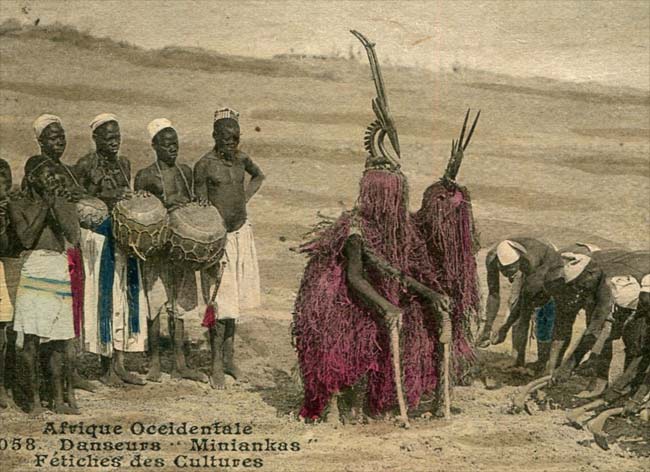
Among the Mossi, the Bendré occupies a particularly important position within courtly and ceremonial traditions. Historically, the instrument was closely associated with the political institutions of the Mossi kingdoms, which emerged between the fifteenth and sixteenth centuries and developed into some of the most influential states of the central West African savannah. The drum accompanied the enthronement of chiefs and kings, public ceremonies, religious celebrations, and state rituals.
The Bendré also functioned as an instrument of historical remembrance. Specialist musicians used it to preserve and transmit genealogies, celebrate rulers, recount heroic deeds, and reinforce the values of the community. Before the widespread introduction of modern communication systems, drums also played an important role in transmitting messages across considerable distances. Within the Mossi kingdoms, the Bendré became an acoustic symbol of authority and collective identity.
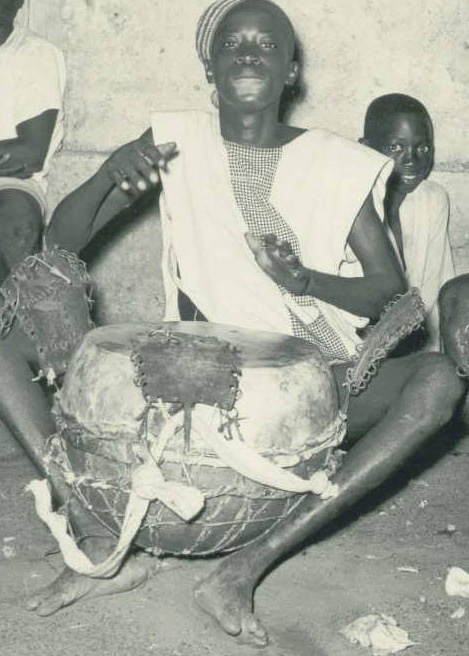
Among the Bamana of Mali, the related Bara drum fulfills somewhat different musical functions. It may be performed as a solo instrument but frequently accompanies the balafon in dance and ceremonial ensembles. This illustrates the remarkable adaptability of gourd drums throughout the region, where identical construction principles often support different musical traditions.
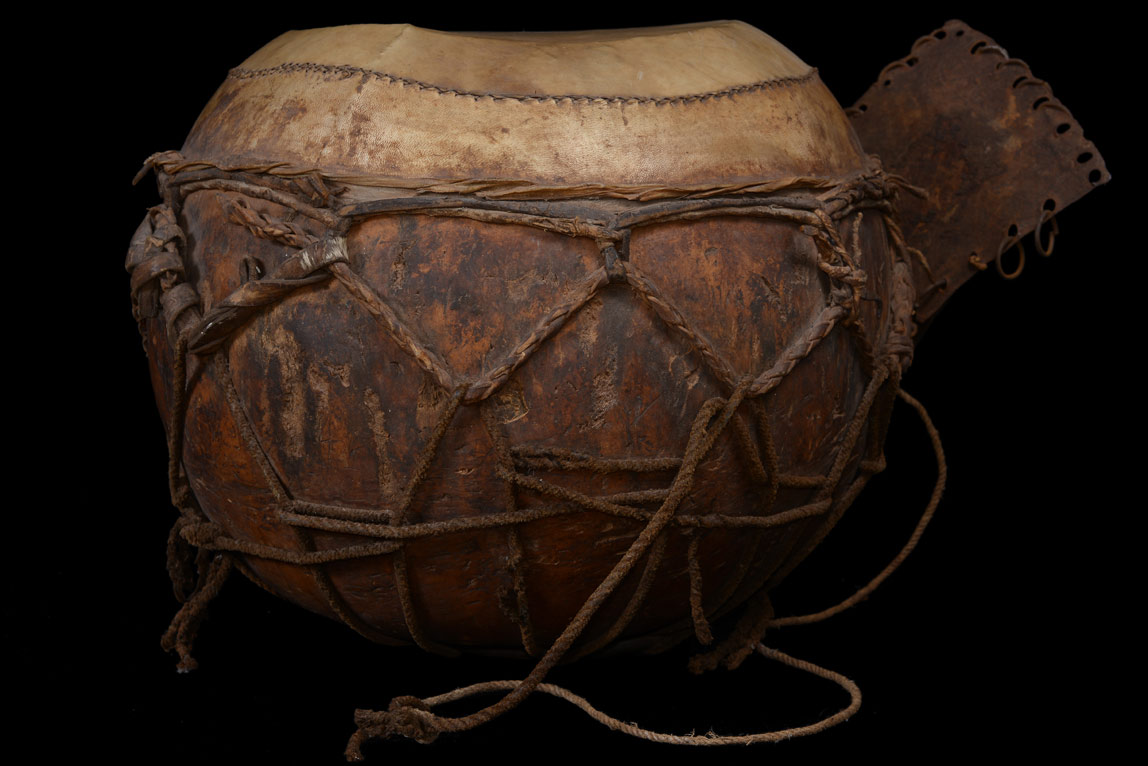
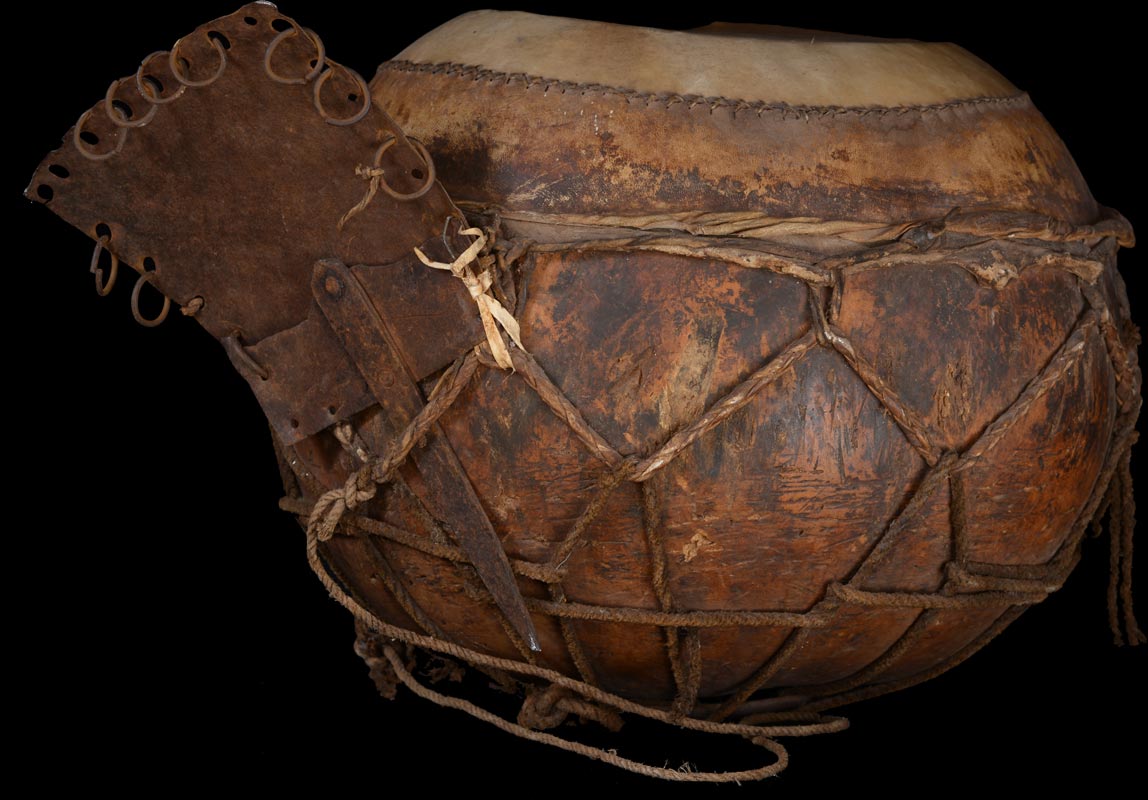
Organologically, the present example belongs to the family of single-headed vessel drums. Its resonator consists of a large, spherical gourd covered with stretched animal hide, probably cow or goat skin. The tensioning system combines cords and leather fastenings that create a net surrounding the body of the instrument. Particularly noteworthy is the metal rattle attached to the side of the instrument. The perforated sheet-metal plate with its suspended rings functions as an idiophonic sound enhancer, creating an additional buzzing effect during performance. Similar rattling devices are widely distributed throughout West Africa and remain a characteristic feature of many contemporary Djembes, where they are commonly known as kessing. Such sound-modifying elements are not merely ornamental but constitute an integral component of the instrument's acoustic design.
From an art-historical perspective, the Bendré demonstrates how musical instruments can simultaneously function as sculptural objects, historical archives, and symbols of political power. The organic form of the calabash, the geometric pattern created by the tension cords, and the visible traces of prolonged use transform the instrument into a material testimony of West African ceremonial culture.
Burkina Faso / Mali (Mossi and Bamana traditions)
The Bendré is one of the most important ceremonial drums of the Mossi people of present-day Burkina Faso. Closely related gourd drums, known among the Bamana of Mali as Bara, are found throughout the western Sudanese cultural zone and represent a remarkable example of the close relationship between music, political authority, oral history, and ritual practice in West Africa.
Large calabash-based drums occur in several West African countries, including Mali, Burkina Faso, Côte d'Ivoire, Ghana, and Benin. Although their construction varies regionally, these instruments share a common principle: a large, naturally grown gourd forms the resonating body and is covered with an animal skin attached by means of cords, leather thongs, or net-like tension systems.
Among the Mossi, the Bendré occupies a particularly important position within courtly and ceremonial traditions. Historically, the instrument was closely associated with the political institutions of the Mossi kingdoms, which emerged between the fifteenth and sixteenth centuries and developed into some of the most influential states of the central West African savannah. The drum accompanied the enthronement of chiefs and kings, public ceremonies, religious celebrations, and state rituals.
The Bendré also functioned as an instrument of historical remembrance. Specialist musicians used it to preserve and transmit genealogies, celebrate rulers, recount heroic deeds, and reinforce the values of the community. Before the widespread introduction of modern communication systems, drums also played an important role in transmitting messages across considerable distances. Within the Mossi kingdoms, the Bendré became an acoustic symbol of authority and collective identity.
Among the Bamana of Mali, the related Bara drum fulfills somewhat different musical functions. It may be performed as a solo instrument but frequently accompanies the balafon in dance and ceremonial ensembles. This illustrates the remarkable adaptability of gourd drums throughout the region, where identical construction principles often support different musical traditions.
Organologically, the present example belongs to the family of single-headed vessel drums. Its resonator consists of a large, spherical gourd covered with stretched animal hide, probably cow or goat skin. The tensioning system combines cords and leather fastenings that create a net surrounding the body of the instrument. Particularly noteworthy is the metal rattle attached to the side of the instrument. The perforated sheet-metal plate with its suspended rings functions as an idiophonic sound enhancer, creating an additional buzzing effect during performance. Similar rattling devices are widely distributed throughout West Africa and remain a characteristic feature of many contemporary Djembes, where they are commonly known as kessing. Such sound-modifying elements are not merely ornamental but constitute an integral component of the instrument's acoustic design.
From an art-historical perspective, the Bendré demonstrates how musical instruments can simultaneously function as sculptural objects, historical archives, and symbols of political power. The organic form of the calabash, the geometric pattern created by the tension cords, and the visible traces of prolonged use transform the instrument into a material testimony of West African ceremonial culture.
References
Arozarena, Pierre. "Notes on Some Mossi Drums of Upper Volta." 1981.
Dagan, Esther A. Drums – The Heartbeat of Africa. Galerie Amrad, 1993.
Meyer, Andreas. Afrikanische Trommeln – West- und Zentralafrika. Staatliche Museen Preußischer Kulturbesitz, Berlin, 1997.
Wieschhoff, Heinz. Die afrikanischen Trommeln und ihre außerafrikanischen Beziehungen. Stuttgart, 1933.
Brown, Ernest Douglas. Drums of Life: Royal Music and Social Life in Western Zambia. PhD dissertation, University of Washington, 1984.