Makonde Drum Tanzania & Mozambique
Ligoma Drum (Makonde, Mozambique)
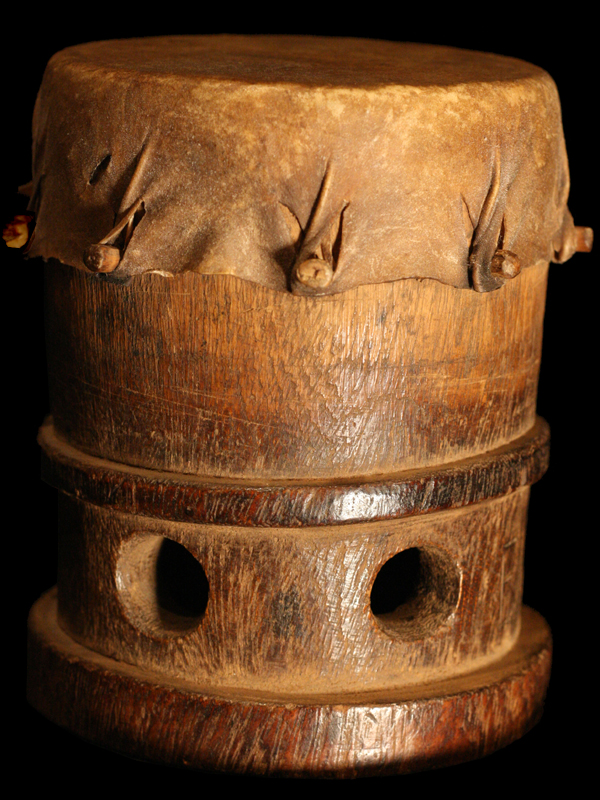
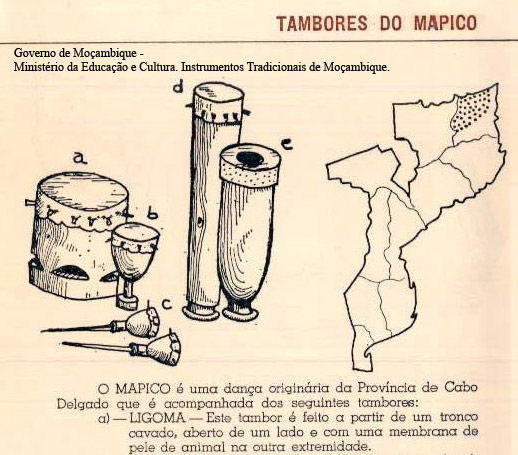
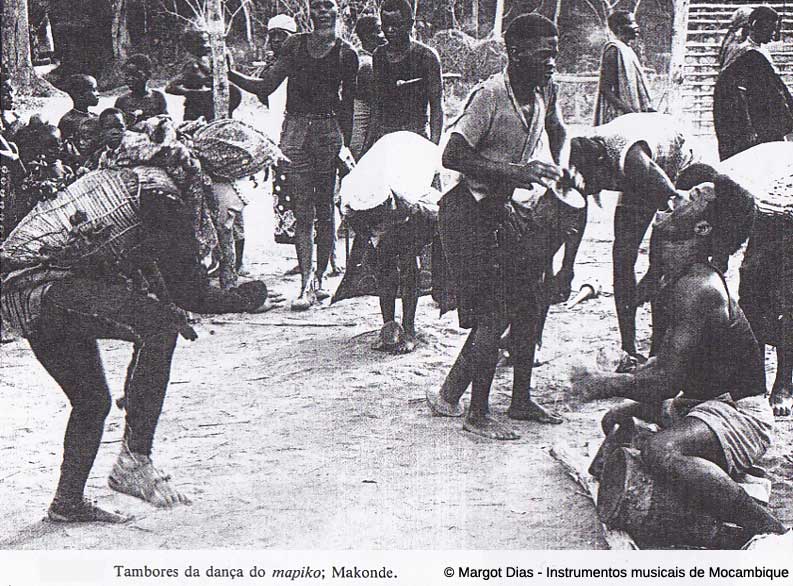
The Ligoma is a single-headed membranophone of the Makonde of northern Mozambique. It belongs to the traditional drum ensemble of the Mapiko, the masked dance tradition of Cabo Delgado.
The Ligoma is one of several drums that form the musical ensemble of Mapiko. Portuguese documentation of the traditional instruments of Mozambique lists the Ligoma together with the Likuti, Singanga, Neya or Neha, and Ntoji or Ntonha. Each has a differentiated musical role. The Ligoma and Likuti are especially closely connected: both can be played by the same musician, who coordinates their patterns with the movements of the masked dancer. The drum is therefore not an isolated rhythmic instrument but part of a highly coordinated relationship between percussion and dance.
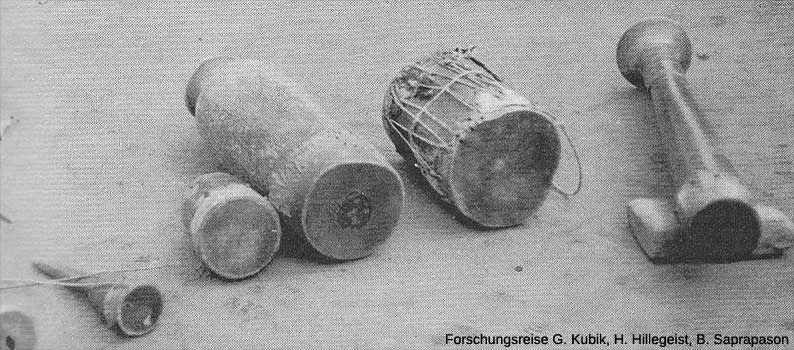
Ethnomusicological field research among the Makonde has documented the Ligoma in several dance contexts. In recordings made in northern Mozambique, the Ligoma was played with the hands, together with other drums whose functions and playing techniques differed. In the nkala dance, for example, the Ligoma was used together with Singanga, Likuti and Ntoyu. Gerhard Kubik's observations also demonstrate that Makonde drumming is related in certain rhythmic and technical respects to neighbouring Makua musical traditions, while retaining its own local repertoire and terminology.
The Ligoma has a particularly important role in the kinetic structure of Mapiko. The percussion does not merely accompany the dancer after the manner of a background rhythm. The Ligoma and Likuti are played in coordination with the movements of the masked performer, while the Neya regulates the cadence of the smaller drums and the Ntoji provides the low-register sounds associated with the movements of the Lipiko dancer. The complete ensemble thus creates a differentiated rhythmic framework in which individual drums contribute to the visual and musical structure of the performance.
Bibliography:Dias, Margot (1986): Instrumentos Musicais de Moçambique. Lisboa: Instituto de Investigação Científica Tropical, Centro de Antropologia Cultural e Social.
Kubik, Gerhard (1964): "Recording and Study in Northern Mozambique." African Music, Vol. 3, No. 3, pp. 91–102.
Duarte, Maria da Luz Teixeira (coord.) (1980): Catálogo dos Instrumentos Musicais de Moçambique. Maputo: Direção Nacional de Cultura, Serviço Nacional de Museus e Antiguidades.
Roseiro, António Henrique Rodrigues: Símbolos e Práticas Culturais Makonde.
Portal da Música Moçambicana: Tambores do Mapiko. Ministério da Cultura / documentation of traditional musical instruments of Mozambique.
Meyer, Andreas (1997): Afrikanische Trommeln – West- und Zentralafrika. Berlin: Staatliche Museen zu Berlin – Preußischer Kulturbesitz.