Africa
songye drum congo
Songye / Basongye Drum (Songye, Democratic Republic of the Congo)
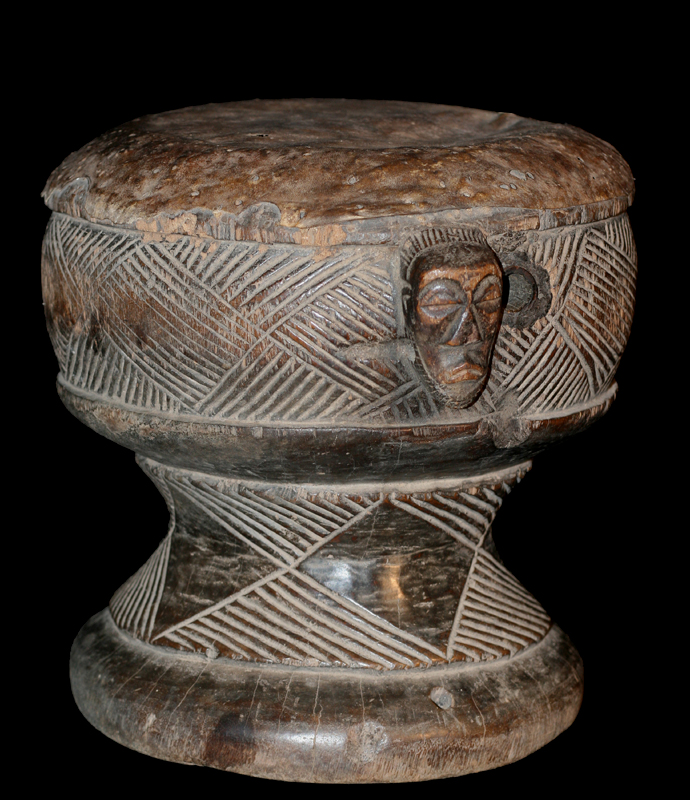
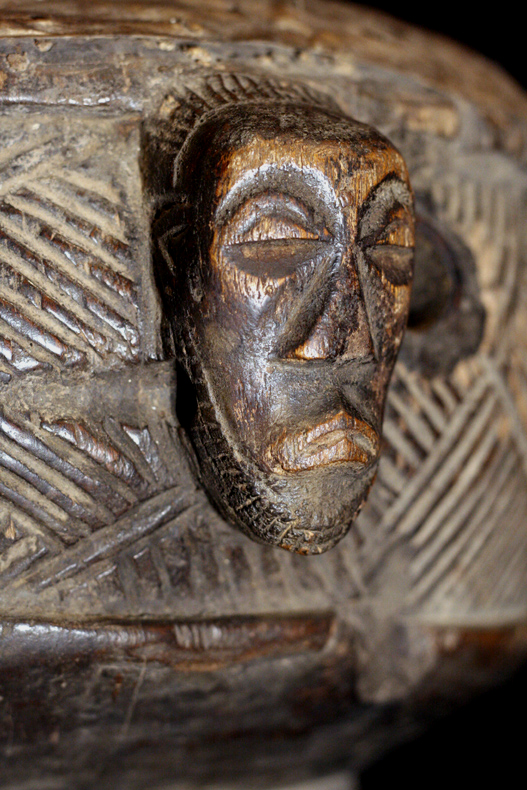
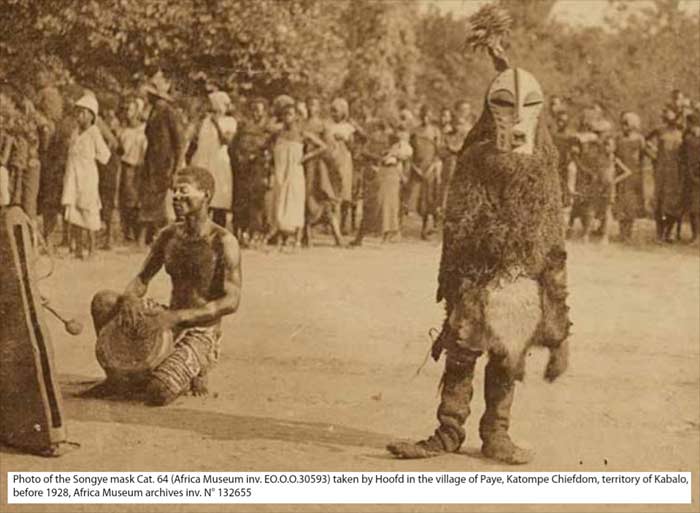
This elaborately carved drum belongs to the musical traditions of the Songye, or Basongye, of the Democratic Republic of the Congo. The drum has a characteristic chalice-shaped body with a broad upper section, a narrower central waist and a broad foot. Its wooden surface is extensively decorated with finely incised geometric patterns, while a carved human face projects from the upper part of the body. The face is an integral sculptural element of the drum and should not be identified as a kifwebe mask.
The combination of musical function and figurative sculpture is particularly significant in Songye material culture. The geometric incisions covering the body form complex intersecting patterns and give the instrument a highly distinctive visual character. The carved face is treated as part of the wooden body rather than as a separate mask attached to the drum. Such sculptural treatment demonstrates that a musical instrument could also serve as an important work of visual art.
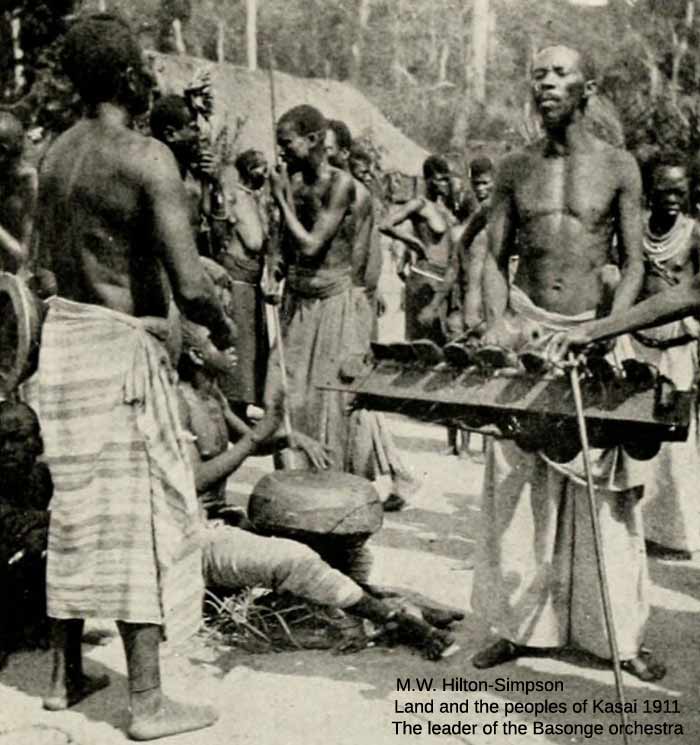
Alan P. Merriam's ethnographic research among the Basongye demonstrates the central position of musicians and musical performance in village life. He recorded several specialized categories of musicians and emphasized that music accompanied major events throughout the social cycle. Birth, death, ceremonies and important communal occasions were associated with musical performance. Among the Basongye, musicians therefore performed functions that were considered indispensable to the normal life of the community.
Merriam also documented the making of the Basongye etumba, a chalice-shaped drum carved from a hollowed tree trunk and covered with goatskin. He recorded that the drum was known in several sizes corresponding to different musical functions. The making of a drum was itself a collective technical and social process requiring specialized knowledge, from the selection of the appropriate tree to the preparation of the wooden body and the mounting of the membrane.
The decorated drum presented here should therefore be understood not simply as a percussion instrument but as an object in which musical, social and artistic values converge. Its sculpted human face and dense geometric ornamentation give the instrument a distinctive visual identity, while its form reflects the long-established importance of drums and specialized musicians within Basongye society.
"Society needs the services of musicians, for without music, normal life patterns simply cannot continue, at least as that society is currently construed by its members. Without the ngomba, the traveling professional, a major funeral cannot take place; without the ntunda, celebration of the village protector figure cannot operate on its regular lunar cycle. Birth, death, and most major events in between take place to the accompaniment of, or are celebrated through, music of one form or another."
Alan P. Merriam, "Basongye Musicians and Institutionalized Social Deviance." Yearbook of the International Folk Music Council, Vol. 11, 1979, pp. 1–26.
Bibliography:
Merriam, Alan P. (1969): "The Ethnographic Experience: Drum-Making among the Bala (Basongye)." Ethnomusicology, Vol. 13, No. 1, pp. 74–100.
Merriam, Alan P. (1974): An African World: The Basongye Village of Lupupa Ngye. Bloomington: Indiana University Press.
Merriam, Alan P. (1979): "Basongye Musicians and Institutionalized Social Deviance." Yearbook of the International Folk Music Council, Vol. 11, pp. 1–26.
Neyt, François: Songye – The Formidable Statuary of Central Africa.
Hersak, Dunja: Songye – Masks and Figure Sculpture.
Mestach, Jean Willy (1985): Études Songye – Songye Studies: Form and Symbolism, an Analytical Essay.
Felix, Marc Leo (2003): Beauty and the Beasts – Kifwebe and Animal Masks of the Songye, Luba and Related Peoples. Tribal Arts S.P.R.L.
Volper, Julien (2012): Under the Influence of the Songye.
Neyt, François (2019): Kifwebe: A Century of Songye and Luba Masks.