Africa
Tabwa Chest Drum (Nfukula, Lake Tanganyika Region)
Tabwa Chest Drum (Nfukula, Lake Tanganyika Region)
Among the peoples living along the western shores of Lake Tanganyika, music has traditionally occupied an important position in the construction of political authority, social identity, and historical memory. The Tabwa, together with neighboring groups such as the Tumbwe and the Holoholo, developed a rich musical culture in which singers, praise poets, and itinerant musicians played an essential role in preserving oral traditions and celebrating the achievements of chiefs, warriors, and other influential members of society.
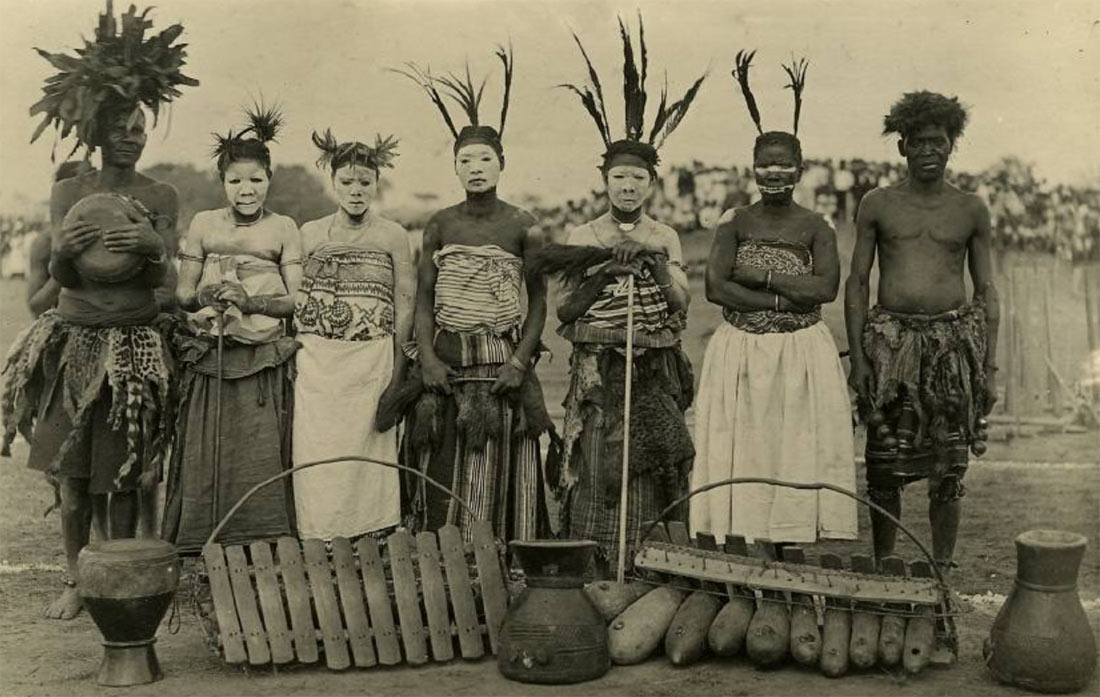
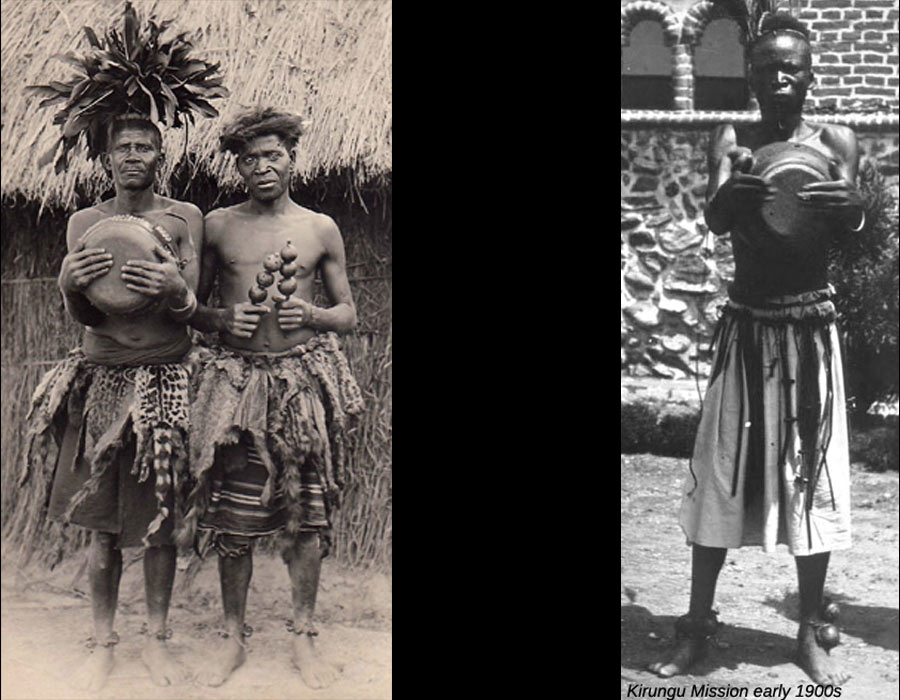
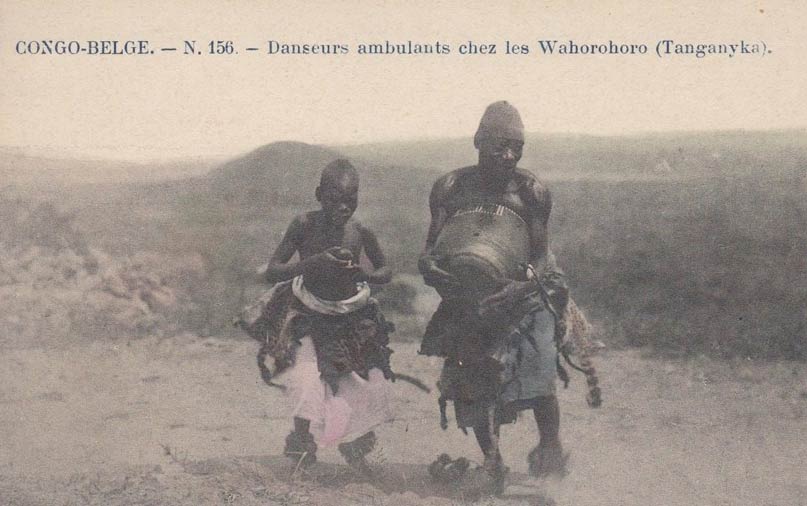
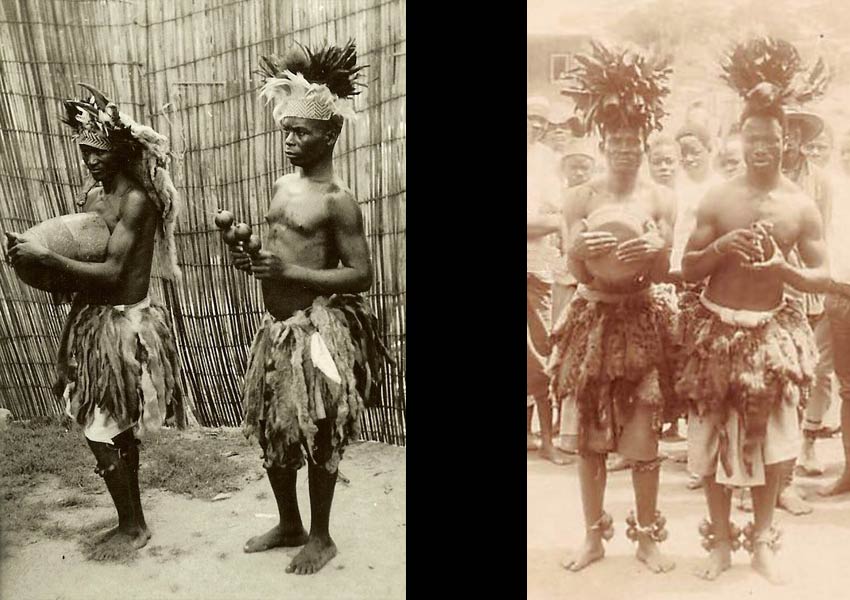
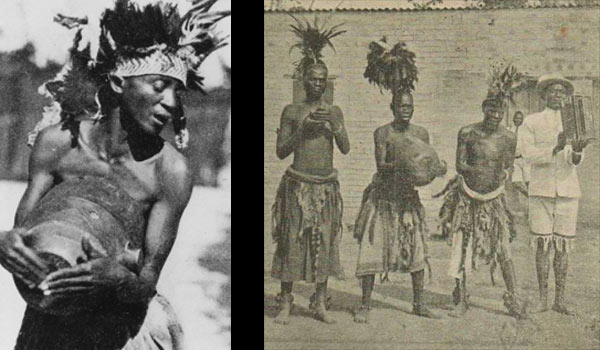
The nfukula, or chest drum, belongs to this cultural environment and represents one of the most distinctive musical instruments of the Lake Tanganyika region. Unlike conventional drums that are placed on the ground or suspended from the shoulder, the nfukula was designed to be held directly against the chest while being played. Historical photographs from the late nineteenth and early twentieth centuries document musicians carrying these drums while accompanying songs, dances, and public performances.
Particularly remarkable is the close relationship between the nfukula and the institution of the sikaomba, the professional minstrel and praise singer. These musicians traveled from village to village, performing songs that celebrated chiefs, political leaders, and other prominent individuals. Through music, they preserved genealogies, transmitted historical knowledge, reinforced political legitimacy, and strengthened social cohesion. Their performances transformed the drum into an instrument of memory as much as an instrument of rhythm.
The nfukula also accompanied warriors during periods of conflict. Ethnographic accounts describe chest-drum players following men into battle, where songs of praise encouraged courage and emphasized ideals of bravery and personal honor. In this context, music became a form of psychological and social support, reinforcing collective identity while simultaneously celebrating individual achievement.
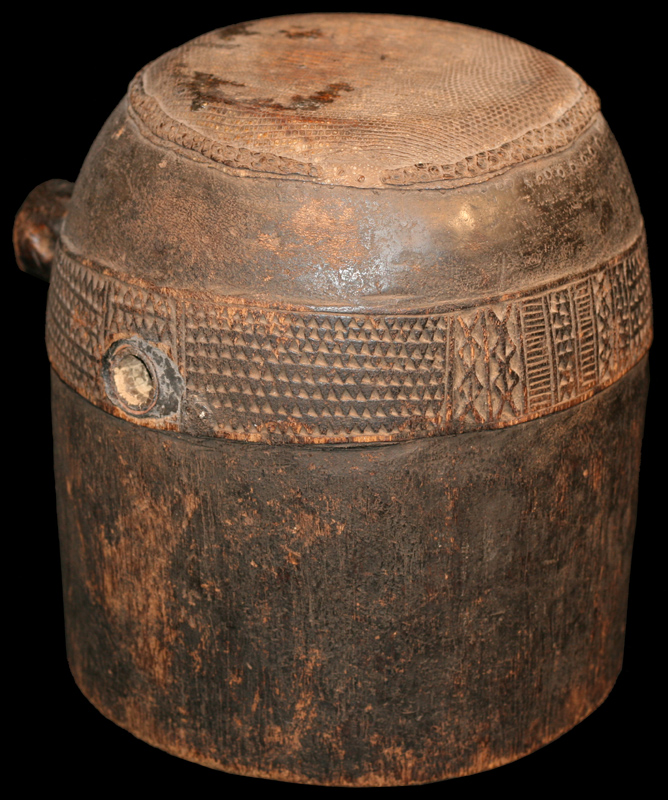
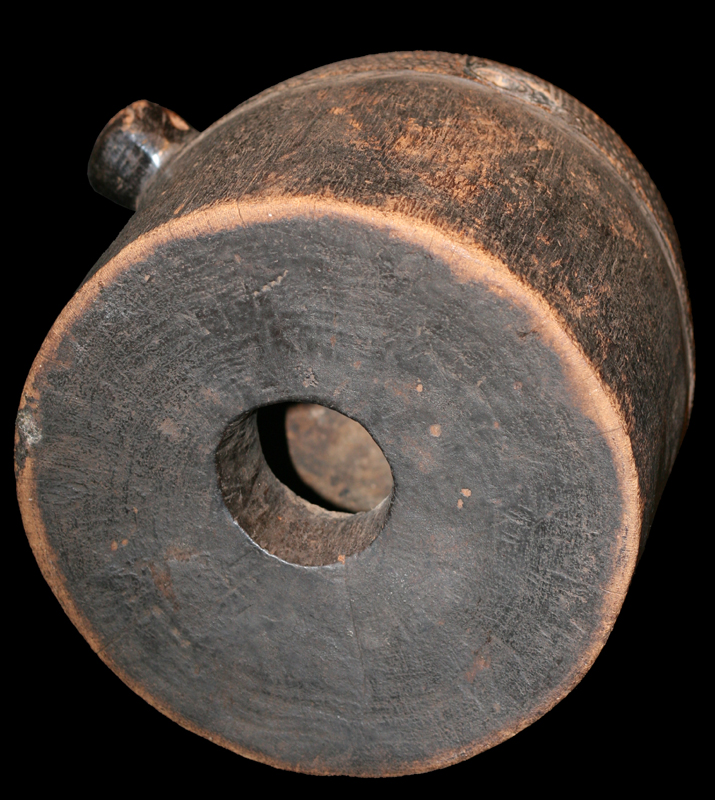
From an organological perspective, the instrument belongs to the family of single-headed membranophones. The present example displays several characteristics typical of Tabwa craftsmanship, including a cylindrical wooden body, a small opening in the base, and an elaborately decorated upper section. The drumhead is traditionally made from Nile monitor skin, attached with acacia thorns, a construction technique characteristic of this region. Geometric carvings covering the upper register of the instrument represent another defining feature of nfukula drums and demonstrate the close relationship between music and visual symbolism in Tabwa artistic traditions.
A small opening is carved into the side of the wooden drum body and fitted with a short tube, often made from the neck of a calabash. This opening is covered with an extremely thin membrane traditionally made from the parchment-like cocoon of a spider or from another delicate natural membrane, which is sealed in place with beeswax. The membrane does not produce sound on its own but vibrates sympathetically with the air pressure created inside the drum when the main drumhead is struck.
The result is a rich, textured timbre rather than a dry percussive tone.
Comparable instruments are also found among neighboring populations, including the nghomba of the Tumbwe and the chest drums of the Holoholo. Their broad geographical distribution reflects centuries of cultural exchange around Lake Tanganyika. Within museum collections, chest drums such as the present example are particularly significant because they document a tradition in which music, praise poetry, political authority, warfare, and artistic expression were inseparably connected.
"Nfukula chest drums are played by minstrels called sikaomba, who travel from place to place singing the praises of chiefs or other important people. Chest-drum players accompanied men to battle, giving them courage by singing their praises."
Maurer, Evan M., and Roberts, Allen F., Tabwa – The Rising of a New Moon: A Century of Tabwa Art. University of Michigan Museum of Art, 1985.
"A similar instrument is the nghomba of the Tumbwe people and the chest drum of the Wahorohoro (Holoholo) in the same region. The nfukula chest drums have heads made from Nile monitor skins fastened with acacia thorns. This drum is always decorated with carved geometrical lines."
Andreas Meyer, Afrikanische Trommeln – West- und Zentralafrika.
Maurer, Evan M.; Roberts, Allen F. (1985): Tabwa – The Rising of a New Moon: A Century of Tabwa Art. University of Michigan Museum of Art.
Boone, Olga (1951): Les tambours du Congo Belge et du Ruanda-Urundi. 2 vols. Tervuren: Annales du Musée du Congo Belge; Ethnographie 1.
Laurenty, Jean-Sébastien (1996): L'Organologie du Zaïre. Tome III. Les membranophones. Tervuren: Musée royal de l'Afrique centrale.
Dagan, Esther A. (ed.) (1993): Drums – The Heartbeat of Africa. Galerie Amrad African Art Publications.
Thomson, Joseph (1891): To the Central African Lakes and Back. London.