DRUMS OF THE WORLD
yoruba drum nigeria
Original quotation
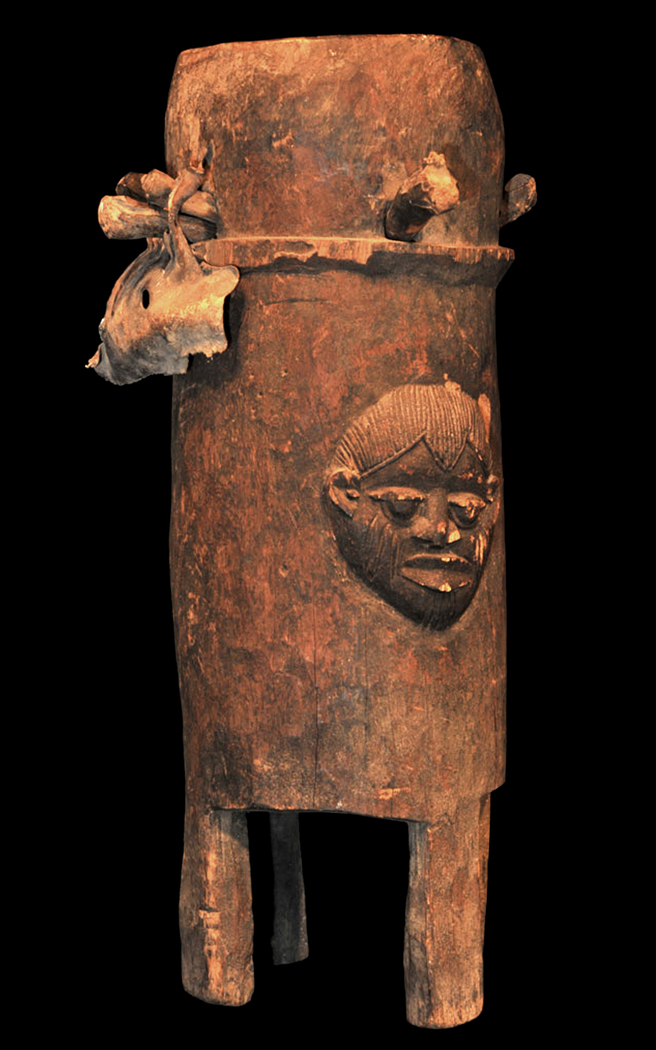
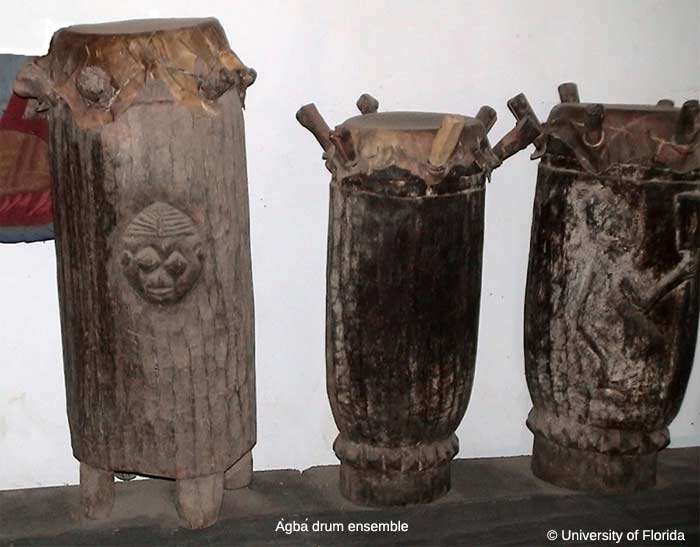
"Àgbá is the drum ensemble used in the cult of Ògbóni, a secret society that wielded strong political, judicial, and religious powers among the Yorùbá in the precolonial era, but now functions as a social and religious group.
Like the ìgbìn and ìpèsè, each of the three-drum ensemble of àgbá is an upright open-ended log drum with a single goatskin/leather head.
But unlike the ìgbìn and/or ìpèsè that are usually of moderate size, àgbá drums are generally large and heavy."
Excerpt from:
Oláwọlé Fámúlẹ̀ - Èdè Àyàn: The Language of Àyàn in Yorùbá Art and Ritual of Egúngún.
University of Wisconsin-Superior.
© University of Florida.
Literature / References
Beier, Ulli: Three Igbin Drums from Igbomina. 1963.
Beier, Ulli: Obatala Festival. In: Nigeria, Vol. 52. 1956.
Dagan, Esther A.: Drums – The Heartbeat of Africa. Galerie Amrad. 1993.
De Silva, Tamara: Symbols and Ritual: The Socio-Religious Role of the Igbin Drum Family.
King, Anthony: Yoruba Sacred Music from Ekiti. Ibadan. 1961.
Kubik, Gerhard: Musikgeschichte in Bildern – Westafrika. Leipzig. 1989.
Laoye, I. Timi von Ede: Yoruba Drums. 1959.
Meyer, Andreas: Afrikanische Trommeln – West- und Zentralafrika. Staatliche Museen Preußischer Kulturbesitz, Berlin. 1997.
Meyer, Andreas: African Drums in the Berliner Museum für Völkerkunde. In: Dagan, Esther A. (ed.): Drums – The Heartbeat of Africa. Galerie Amrad. 1993.
Oláwọlé Fámúlẹ̀: Èdè Àyàn: The Language of Àyàn in Yorùbá Art and Ritual of Egúngún.
Ortiz, Fernando: Los instrumentos de la música afrocubana. Havana. 1952. Five volumes.
Thieme, Darius: A Descriptive Catalogue of Yoruba Musical Instruments. Dissertation, Washington, D.C. 1969.
Willett, Frank: A Contribution to the History of Musical Instruments among the Yoruba. 1977.
"Àgbá is the drum ensemble used in the cult of Ògbóni, a secret society that wielded strong political, judicial, and religious powers among the Yorùbá in the precolonial era, but now functions as a social and religious group.
Like the ìgbìn and ìpèsè, each of the three-drum ensemble of àgbá is an upright open-ended log drum with a single goatskin/leather head.
But unlike the ìgbìn and/or ìpèsè that are usually of moderate size, àgbá drums are generally large and heavy."
Excerpt from:
Oláwọlé Fámúlẹ̀ - Èdè Àyàn: The Language of Àyàn in Yorùbá Art and Ritual of Egúngún.
University of Wisconsin-Superior.
© University of Florida.
Literature / References
Beier, Ulli: Three Igbin Drums from Igbomina. 1963.
Beier, Ulli: Obatala Festival. In: Nigeria, Vol. 52. 1956.
Dagan, Esther A.: Drums – The Heartbeat of Africa. Galerie Amrad. 1993.
De Silva, Tamara: Symbols and Ritual: The Socio-Religious Role of the Igbin Drum Family.
King, Anthony: Yoruba Sacred Music from Ekiti. Ibadan. 1961.
Kubik, Gerhard: Musikgeschichte in Bildern – Westafrika. Leipzig. 1989.
Laoye, I. Timi von Ede: Yoruba Drums. 1959.
Meyer, Andreas: Afrikanische Trommeln – West- und Zentralafrika. Staatliche Museen Preußischer Kulturbesitz, Berlin. 1997.
Meyer, Andreas: African Drums in the Berliner Museum für Völkerkunde. In: Dagan, Esther A. (ed.): Drums – The Heartbeat of Africa. Galerie Amrad. 1993.
Oláwọlé Fámúlẹ̀: Èdè Àyàn: The Language of Àyàn in Yorùbá Art and Ritual of Egúngún.
Ortiz, Fernando: Los instrumentos de la música afrocubana. Havana. 1952. Five volumes.
Thieme, Darius: A Descriptive Catalogue of Yoruba Musical Instruments. Dissertation, Washington, D.C. 1969.
Willett, Frank: A Contribution to the History of Musical Instruments among the Yoruba. 1977.