Africa
Diviner's Slit Gong (Probably Zombo, Democratic Republic of the Congo)
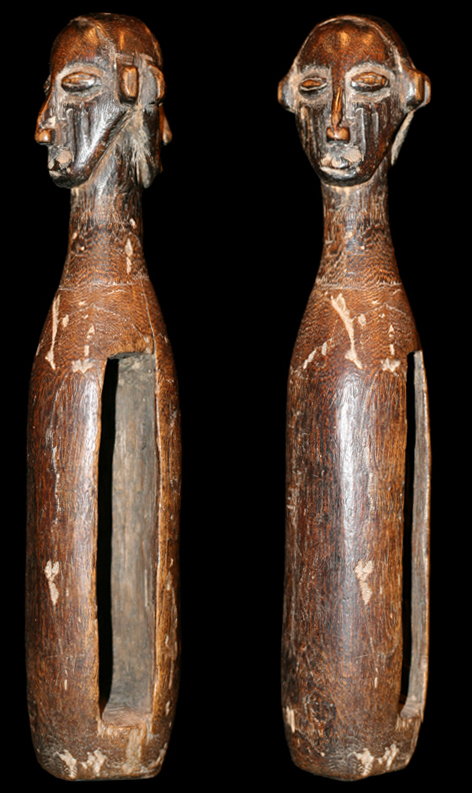
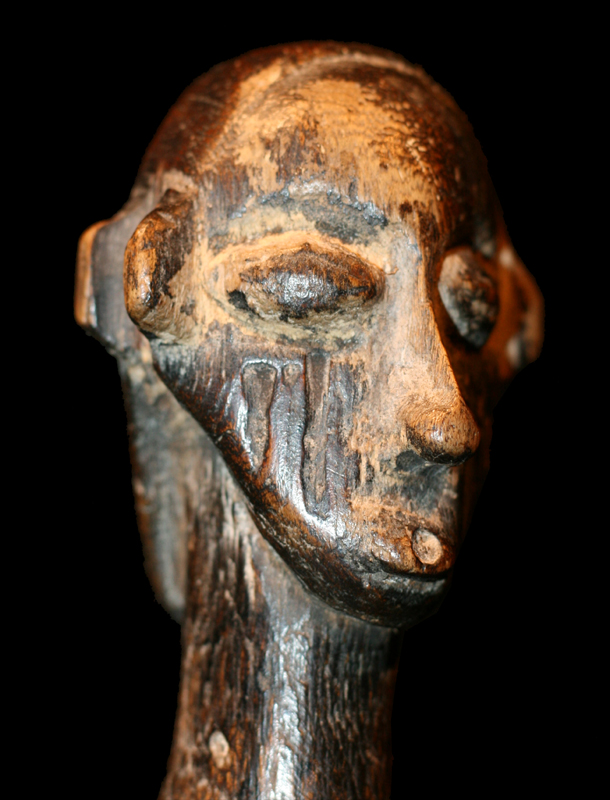
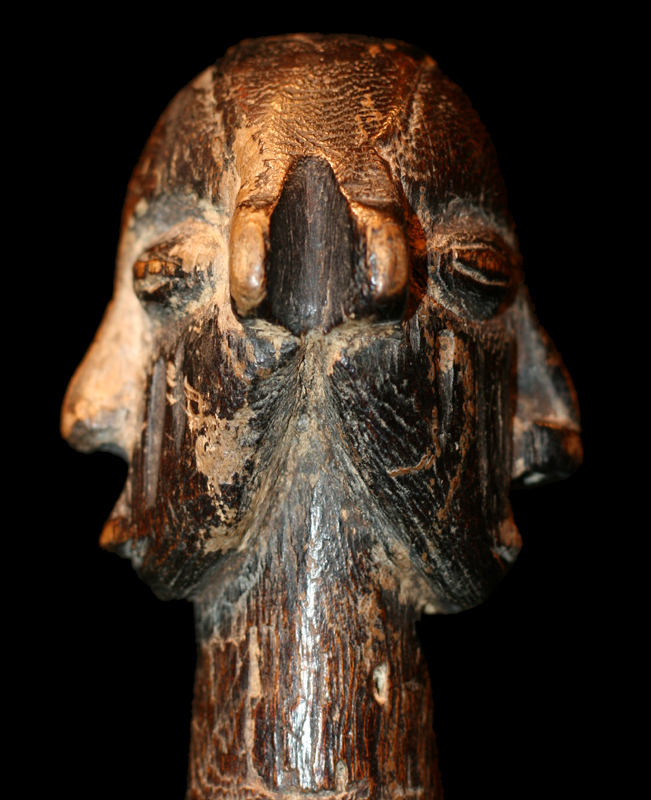
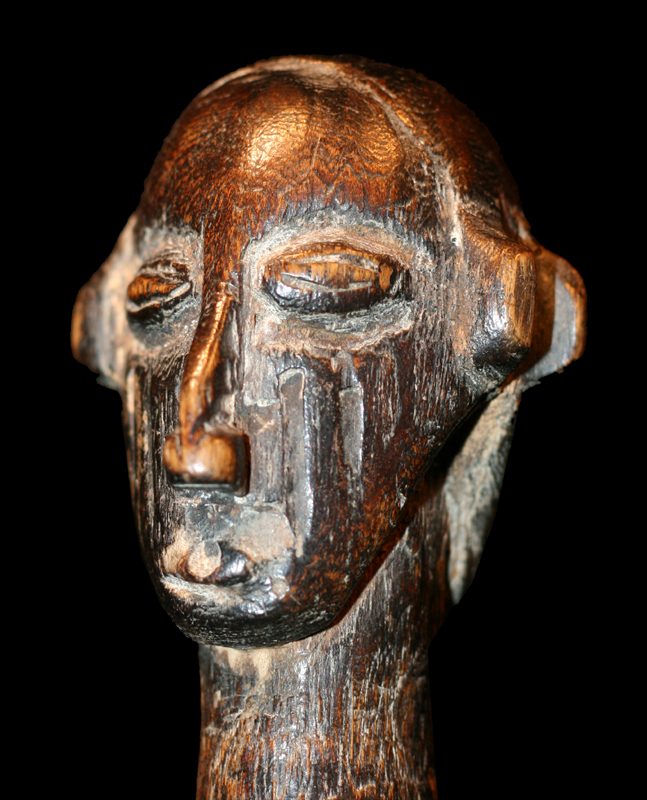
Diviner's Slit Gong (Probably Zombo, Democratic Republic of the Congo)
Throughout Central Africa, divination has traditionally functioned as one of the most important mechanisms for maintaining social equilibrium and restoring harmony between individuals, the community, the ancestors, and the spiritual world. Among many societies of the Lower Congo and the Kwango region, illness, infertility, misfortune, and unexpected death were frequently interpreted not as random events but as signs of an imbalance caused by neglected ancestors, offended spirits, broken social obligations, or the influence of destructive spiritual forces.
The present slit gong can probably be attributed to the Zombo, a people closely related to the Yaka and other cultural groups living between present-day Angola and the Democratic Republic of the Congo. Within this cultural environment, divination was not limited to predicting future events. Instead, it represented a complex therapeutic system through which ritual specialists identified the hidden causes of illness and social conflict and prescribed appropriate remedies to restore balance.
Unlike conventional slit drums used primarily for communication or musical performance, this instrument fulfilled several ritual functions simultaneously. Ethnographic studies describe similar objects as symbols of the diviner's authority. In addition to producing sound, the instrument could serve as a container in which medicinal substances, magical preparations, and therapeutic materials were stored and prepared. The object therefore occupied a central position within the ritual space and embodied the close relationship between sound, healing, and spiritual practice.
Among the Yaka and neighboring peoples, the boundaries between medicine, religion, and divination were traditionally fluid rather than strictly separated. René Devisch demonstrated that healing practices among the Yaka were based on a comprehensive understanding of the individual as part of an interconnected network linking the body, the family, the ancestors, and the surrounding spiritual environment. Ritual objects associated with divination were therefore not passive instruments but active participants in the therapeutic process.
From an organological perspective, the instrument belongs to the family of idiophones and more specifically to the category of slit gongs. Sound is produced by striking the resonating body rather than by vibrating a membrane. Although slit gongs are widely distributed throughout Africa, examples associated with ritual specialists frequently differ from ordinary communication instruments because their symbolic and ceremonial functions are emphasized over their purely acoustic properties.
Within museum collections, divination instruments occupy a particularly significant position because they preserve both material and intangible cultural heritage. Objects such as the present slit gong document traditional systems of healing, indigenous knowledge, religious practice, and the role of ritual specialists within Central African societies. They demonstrate that musical instruments can function simultaneously as sound-producing devices, sacred symbols, therapeutic tools, and works of sculpture.
"Often illness and unexplained deaths are believed to be caused by offended ancestors or neglected deities. The sorcerer identifies the cause of the problem and prescribes a remedy. The wooden slit drum is the symbol of the sorcerer but is also used as the sorcerer's seat and as a container in which to prepare medicines."
Traditional description of a Central African diviner's slit gong.
Beek, Walter E. A. van, and Peek, Philip M. (2013): Reviewing Reality: Dynamics of African Divination.
Bourgeois, Arthur P.: Art of the Yaka and Suku. Meudon, Alain and Françoise Chaffin, 1984.
Bourgeois, Arthur P.: Kakungu among the Yaka and Suku. African Arts, Vol. 14.
Devisch, René: The Therapist and the Source of Healing among the Yaka of Zaire. 1990.
de Beir, L.: Religion et magie des Bayaka. 1975.
Pemberton, John: Insight and Artistry in African Divination.
Plancquaert, Michel: Les Sociétés Secrètes chez les Bayaka. Louvain, Imprimerie J. Kuyl-Otto, 1930.
Plancquaert, Michel: Les Jaga et les Bayaka du Kwango. 1932.