DRUMS OF THE WORLD
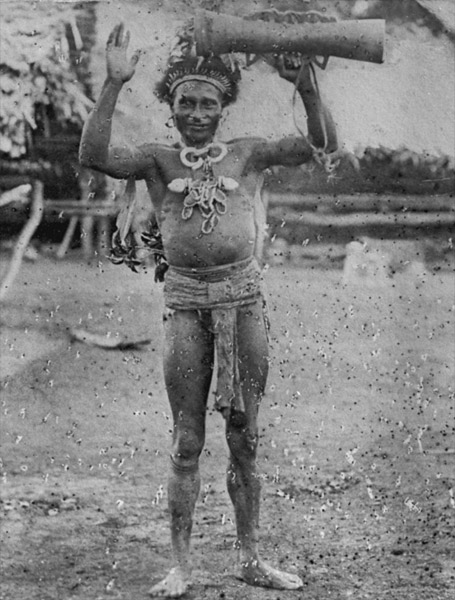
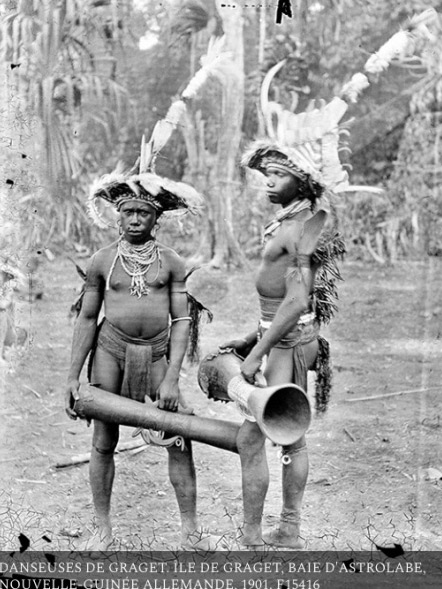
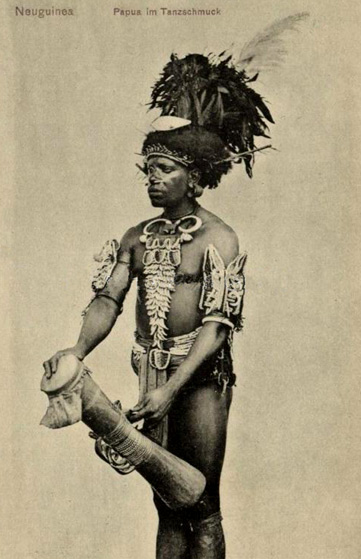
Astrolabe Bay Hand Drum New Guinea
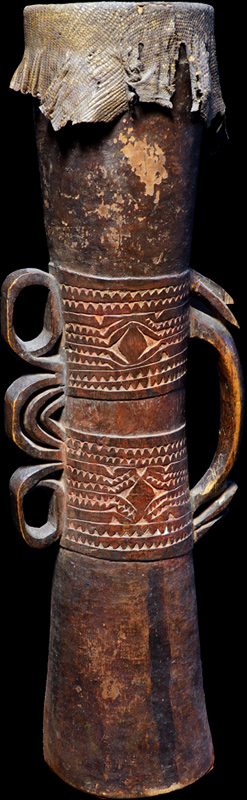
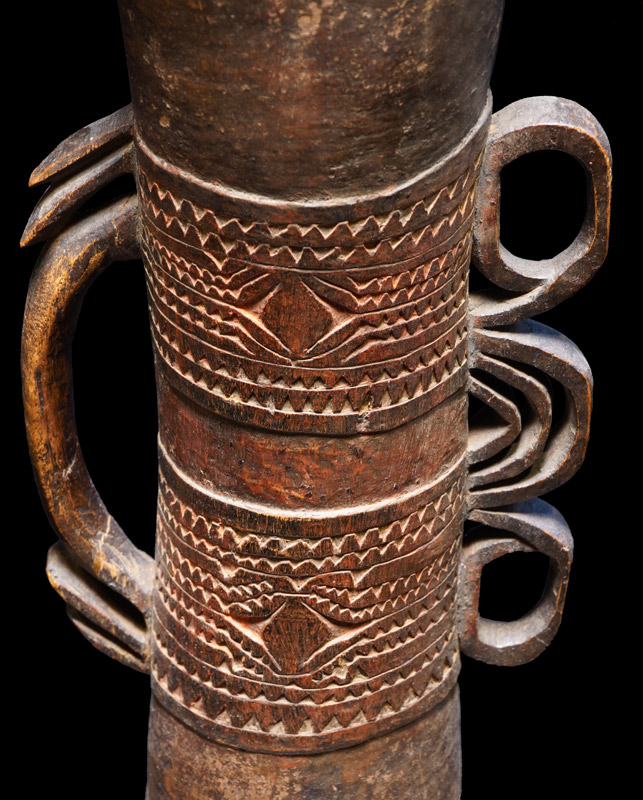
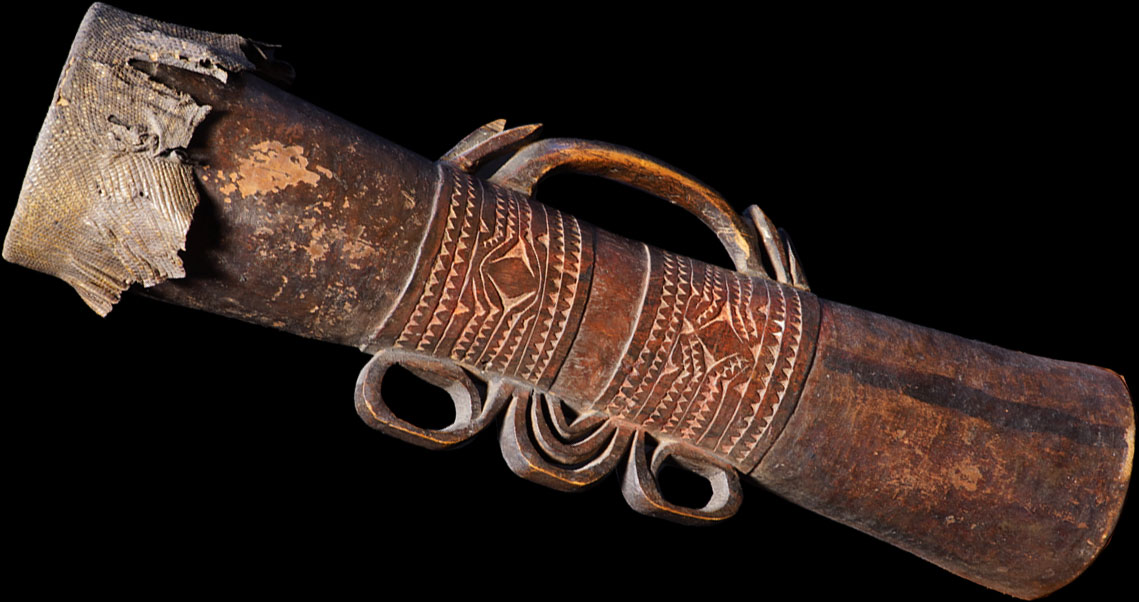
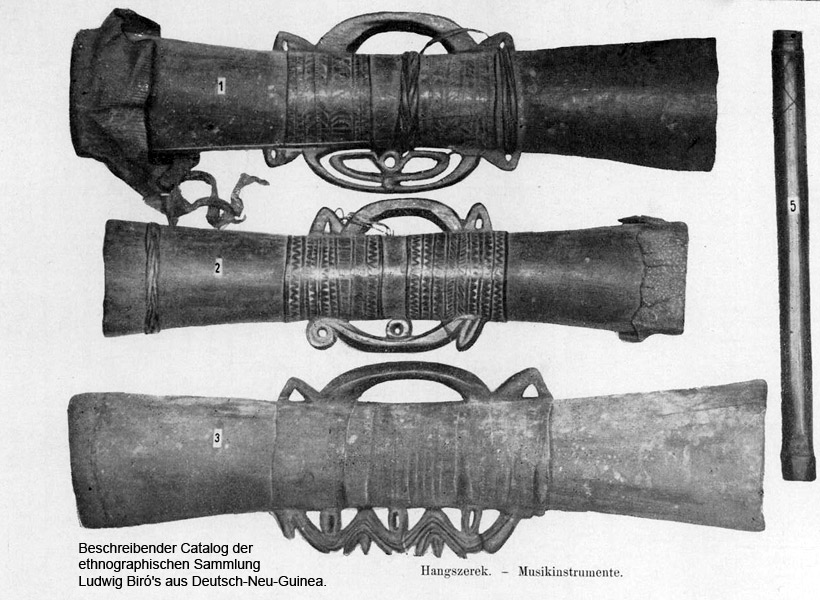
Bodrogi, Tibor (1950) Yabim Drums in the Bíró Collection / Yabim-típusú dobok a Bíró-gyűjteményben. Néprajzi Múzeum.
Bodrogi, T. 1959, New Guinea Style Provinces: The Style Province “Astrolabe Bay”.In: Opuscula Ethnologica Memoriae Ludovici Biro Sacra (Hungarian Academy of Sciences, Budapest) Vol. 6, pp. 39-99.
Bodrogi, T. 1961, Art in North-East New Guinea. Budapest: Hungarian Academy of Sciences.
Biro, Lajos 1901, Beschreibender Catalog der Ethnographischen Sammlung Ludwig Biro’s aus Deutsch-Neu-Guinea (Astrolabe-Bai). [Beschreibungen von Willibald Semayer.] Ethnographische Sammlungen des Ungarischen Nationalsmuseums III. Budapest. Német-új-Guineai (Astrolabe-Öböl) néprajzi gyűjtésének leíró jegyzéke. Magyar Nemzeti Múzeum Néprajzi gyűjteményei.
Biro, Lajos : Hét év Új-Guineában : levelek két világrészből.
Finsch, Otto (1888) Reisen in Kaiser Wilhelms-Land und Neu-Guinea an Bord des Dampfers Samoa.
Finsch, Otto (1888)Ethnologische Erfahrungen und Belegstücke aus der Südsee: beschreibender Katalog einer Sammlung im K.K. Naturhistorischen Hofmuseum in Wien.
Massola Aldo : Drum Types of Eastern New Guinea 1957
Hamson, Michael (Editor): Between the Known and Unknown : New Guinea Art from Astrolabe Bay to Morobe. Contributions by : Crispin Howarth, Christin Kocher Schmid, Dieter Klein, Fritz Klusmeier, Klaus Maaz, Virginia-Lee Webb, Robert L. Welsch, Arnold Wentholt, Gabor Vargyas
Vargyas Gabor : Art of Astrolabe Bay. In: Art and Performance in Oceania. Edited by: Barry Craig, Bernie Kernot, Christopher Anderson.
Frazer, James George, The belief in immortality and the worship of the dead. 1913
Biró, Lajos (ed. by Jankó, János) (1899): Beschreibender Catalog der ethnographischen Sammlung Ludwig Biró-s aus Deutsch-Neu-Guinea (Berlinhafen). Budapest.
Biró, Lajos (ed. by Seemayer, Villibald) (1901): Beschreibender Catalog der ethnographischen Sammlung Ludwig Biró-s ausDeutsch-Neu-Guinea (Astrolabe-Bai). Budapest.
Biró, Lajos (1923): Hét év Új-Guineában. Levelek két világrészb l. [Seven years in New Guinea. Letters from two continents. In Hungarian.] Budapest: Világirodalom.
Biró, Lajos (1932): Újguineai utazásom emlékei [Memories of my Travels in New Guinea. In Hungarian] Budapest: Királyi Magyar Természettudományi Társulat.
Bodrogi, Tibor (1953): Some Notes on the Ethnography of New Guinea. I. Initiation Rites and Ghost-Cult in the Astrolabe Bay Region. Acta Ethnographica, III: 91–144.
Bodrogi, Tibor (1959): New Guinean Style Provinces. The Style Province “Astrolabe Bay.” In T. Bodrogi and L. Boglár (eds.) (): Opuscula Ethnologica Memoriae Ludovici Bíró Sacra. Bp.Akadémiai K., 39–99.
Bodrogi, Tibor (1978-80): A Mask from the Astrolabe Bay Area. The Minneapolis Institute of Arts Bulletin, LXIV: 80–87.
Bodrogi, Tibor (1979): Style Provinces and Trading Areas in North and Northeast New Guinea. In S. Mead (ed.): Exploring the Visual Art of Oceania. The University Press of Hawaii, Honolulu, 265–277.
Bodrogi, Tibor (1982): M vészet Észak-Új-Guineában, az Astrolabeöböl térségében. [Art in Northeast New Guinea, in the Astrolabe Bay Area] M vészet, Vol. XXIII. Nr. 10. 39–43.
Bodrogi, Tibor (1990): Between the Invisible and the Tangible. The Role of Art in Communication Between the Two Realms. An Example from Papua New Guinea.
Czapli ka, Maria Antonina (1914): Life and Work of N. N. Miklukho-Maklay. Man, No.98. 198–203.
Gyarmati, János (ed.by) (2008): Taking them back to my homeland…Hungarian Collectors – Non-European Collections of the Museum of Ethnography in a European Context. Budapest: Museum of Ethnography.
Finsch, Otto (1865): Neu-Guinea und Seine Bewohner. Bremen.
Finsch, Otto (1886a) Katalog der ethnologischen Sammlung der Neu-Guinea-Compagnie, ausgestellt im königl. Museum fürVölkerkunde (Berlin 1886)
Finsch, Otto (1888a): Samoa-Fahrten. Reisen in Kaiser Wilhelms-Land und Englisch-Neu-Guinea in den Jahren 1884 und 1885 an Bord des Deutschen Dampfers “Samoa.” Leipzig, Ferdinand Hirt & Sohn.
Finsch, Otto (1914): Südseearbeiten. Gewerbe- und Kunstfleiss, Tauschmittel und “Geld” der Eingeborenen auf Grundlage der Rohstoffe und der geographischen Verbreitung. Hamburg: L.Friedrichsen & Co.
Haddon, Alfred C. (1894): The Decorative Art of British New Guinea. Cunningham Memoirs No.10. Dublin.
Hagen, Bernhard von (1899): Unter den Papuas in Deutsch-Neu-Guinea. Wiesbaden.
Kriele, Eduard (1927) Das Kreuz unter den Palmen. Die Rheinische Mission in Neu-Guinea. Barmen. Kunze, Georg (1897): Allerlei Bilder aus dem Leben der Papua.
Rheinische Missionsschriften, H. 3. Barmen. Lauterbach, Carl (1891): Eine Expedition zur Erforschung des Hinterlandes der Astrolabe-Bai. Nachrichten über Kaiser-Wihelms- Land. Vol. VII: 31–62. Berlin.
Miklucho-Maclay, N.N. (1875) Ethnologische Bemerkungen ueber die Papuas der Maclay-Küste in Neu-Guinea. NTN, Deel. XXXV: 66–94.
Miklucho-Maclay, N.N. (1876): Ethnologische Bemerkungen ueber die Papuas der Maclay-Küste in Neu-Guinea. NTN, Deel. XXXVI: 294–334.
Miklucho-Maclay, N. N. (1878): Vestiges de l’art chez les Papouas de la côte Maclay en Nouvelle-Guinée. Bulletin de la Société d’Anthropologie de Paris. Vol. III/1: 524–531.
Mikloucho-Maclay, N. N. (1975): New Guinea Diaries, 1871–1883. (Translated from the Russian with biographical and historical notes by C. L. Sentinella.) Kristen Press, Madang, Papua New Guinea.
Miklouho-Maclay, N. (1982): Travels to New Guinea. Diaries. Letters. Documents.
Neuhauss, Richard (1911): Deutsch-Neu-Guinea. Vols. I–III. Berlin.
New Guinea Art. Masterpieces from the Jolika Collection of Marcia and John Friede (2005). Essays by Gregory Hodgins, Philippe Peltier, Dirk Smidt, and Robert L. Welsch. Vols.1-2. Fine Arts Museums of San Francisco in Association with 5 Continents Editions.
Preuss, Konrad Theodor (1897-98): Künstlerische Darstellungen aus Kaiser-Wilhelms-Land in ihrer Bedeutung für die Ethnographie. Zeitschrift für Ethnologie, Vol. XXIX:77–141
Schmeltz, J. D. E. (1895–1896): Beiträge zur Ethnographie von Neu-Guinea. V. Ueber eine Sammlung aus Konstantinhafen, Astrolabebai.
Steffen, Paul [B.] (1995): Missionsbeginn in Neuguinea. Die Anfänge der Rheinischen, Neuendettelsauer und Steyler Missionarbeit in Neuguinea. (Studia Instituti Missiologici SVD 61.) Steyler Verlag,
Vargyas, Gábor (1986): Data on the Pictorial History of Northeast Papua New Guinea. (Occasional Papers in Anthropology 1.) Budapest, Ethnographical Institute of the Hungarian Academy of Sciences, 1986, 90 pp. and 69 b/w photos.
Vargyas, Gábor (1987): Field Notes from the Astrolabe Bay (Madang Province, Papua New Guinea). (Occasional Papers in Anthropology 2.) Budapest, Ethnographical Institute of theHungarian Academy of Sciences, 1987, 60 pp. and 195 b/w photos.
Vargyas, Gábor (1991): “Bíró, Lajos.” In: International Dictionary of Anthropologists. Compiled by Library-Anthropology Resource Group. General Editor: Christopher Winters. Garland Publishing,New York and London, 61–62.
Vargyas, Gábor (1998): Art of the Astrolabe Bay. History of Research, Results and Future Research Tasks. In Barry Craig – B. Kernot – and Christian Anderson (eds.): Art and Performance in Oceania.Bathurst, Crawford House Publishing, 246–253.
Vargyas, Gábor (2008): The Oceanian Collection. In: J. Gyarmati (ed. by): Taking them back to my homeland... Hungarian Collectors – Non-European Collections of the Museum of Ethnography in a European Context. Budapest, Museum of Ethnography, 207–248.
Vargyas, Gábor (2016): Through Each Other’s Eyes. How the Hungarian Naturalist Lajos Biró saw German Missionaries in New Guinea, and Vice Versa. In M. Hamson (ed.): Between the Known and the Unknown. New Guinea Art from Astrolabe Bay to Morobe. Printed by Cassochrome, Waregem, Belgium, 32–37.
Weiss, Gabriele und Ildikó Cazan-Simányi (2012): Aus dem Pazifik. Ein Sammler aus Leidenschaft. F.H. Otto Finsch (1839-1917). Eine Ausstellung des Museums für Völkerkunde, Wien –Kunsthistorisches Museum.
Welsch, Robert L. (ed.): (1998): An American Anthropologist in Melanesia: A. B. Lewis and the Josph N. Field South Pacific Expedition, 1909–1913. Honolulu: University of Hawai’i Press. (2 vols.)
Welsch, Robert L. (2000): One time, one place, three collections: colonial processes and the shaping of some museum collections from German New Guinea. In Hunting the Gatherers:Ethnographic Collectors, Agents and Agency in Melanesia, 1870s–1930s. Eds. by Michael O’Hanlon and R. L. Welsch. Oxford: Berghahn Books, 55–79.
Welsch, Robert L. (2005): One symphony from many voices: collectors, collecting activities, and the culture of collecting Since 1870. In New Guinea Art. Masterpieces from the Jolika Collection of Marcia and John Friede. Pp.8–29.
Welsch, Robert L. (2016): Huon Gulf Collections and Collectors: on Understanding the Art of the Huon Peninsula and the Vitiaz Strait. In Hamson, Michael (2016) (ed.): Between the Known and the Unknown. New Guinea Art from Astrolabe Bay to Morobe.
Werner, E. (1911): Kaiser-Wilhelms-Land. Beobachtungen und Erlebnisse in den Urwäldern Neuguinea. Freiburg.
Wichmann, Artur (1909–1912): Entdeckungsgeschichte von Neu-Guinea. 1909: vol.1: Entdeckungsgeschichte von Neu-Guinea bis 1828, 45 maps, 387 pp.; 1910: vol. 2. (1st part): Entdeckungsgeschichte von Neu-Guinea 1828–1885, 37 maps, 369 pp.; 1912: Entdeckungsgeschichte von Neu-Guinea 1885–1902, 36 maps, 1026 pp. Leiden, Brill.
Zöller, Hugo (1891): Deutsch-Neu-Guinea und meine Ersteigung des Finisterre-Gebirges. Stuttgart–Berlin–Leipzig.